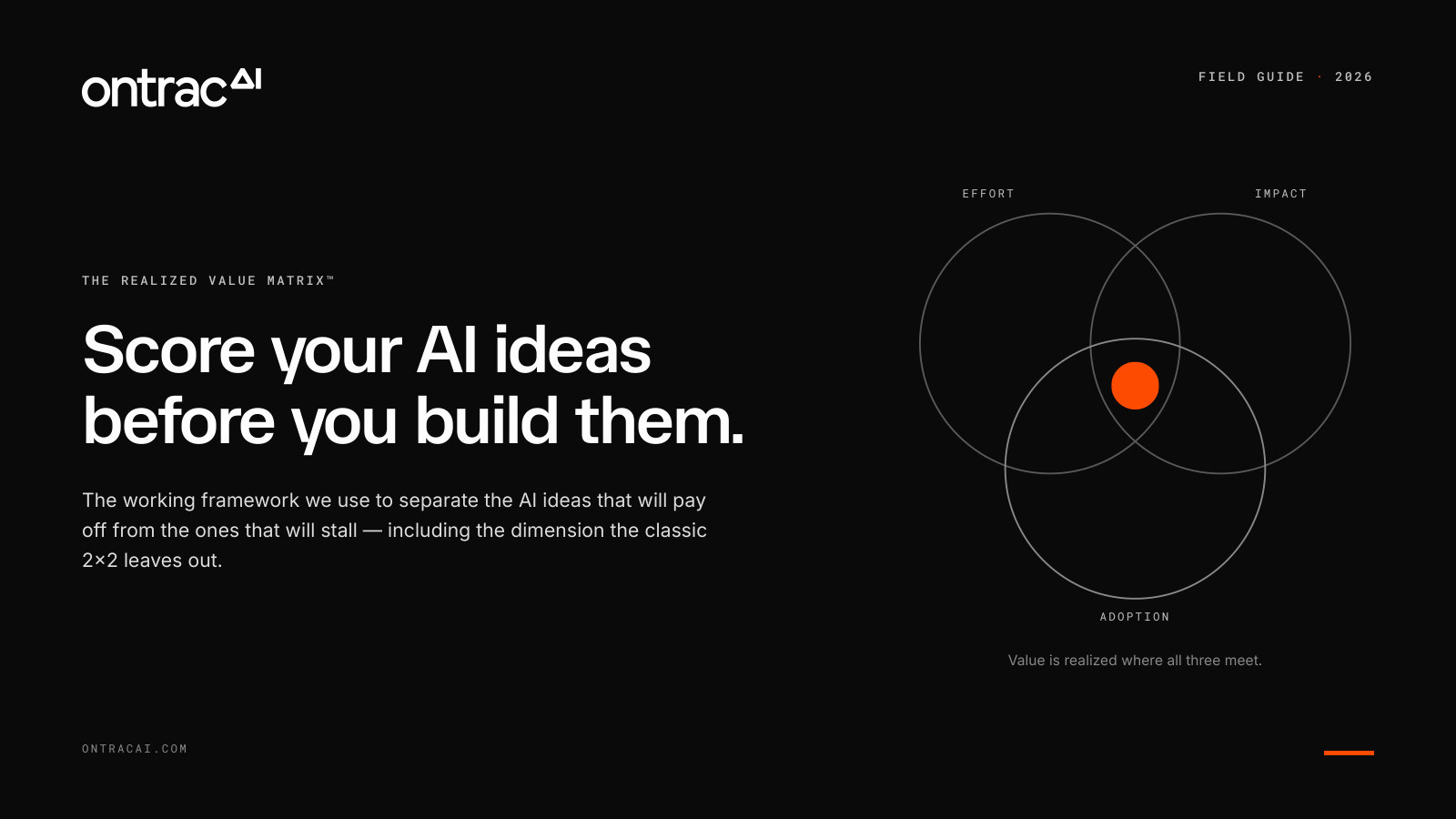
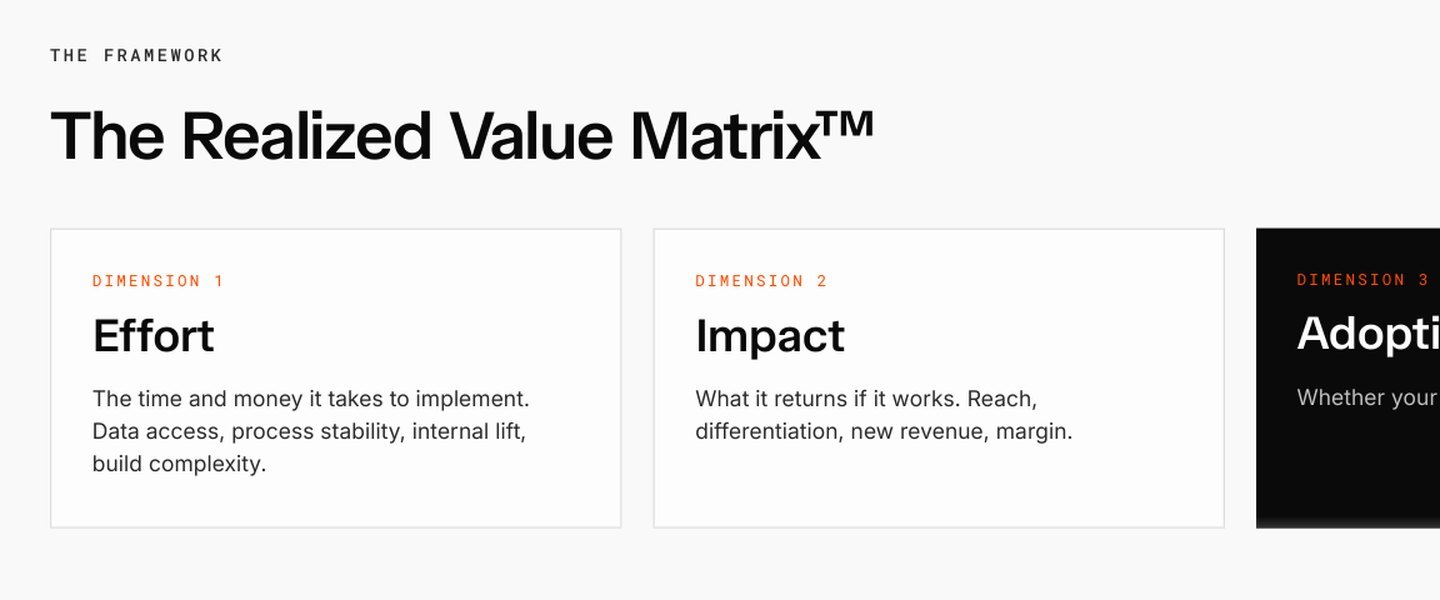
The Realized Value Matrix™ is the working framework we use to separate the AI ideas that will pay off from the ones that will stall — including the dimension the classic 2×2 leaves out.
What's inside
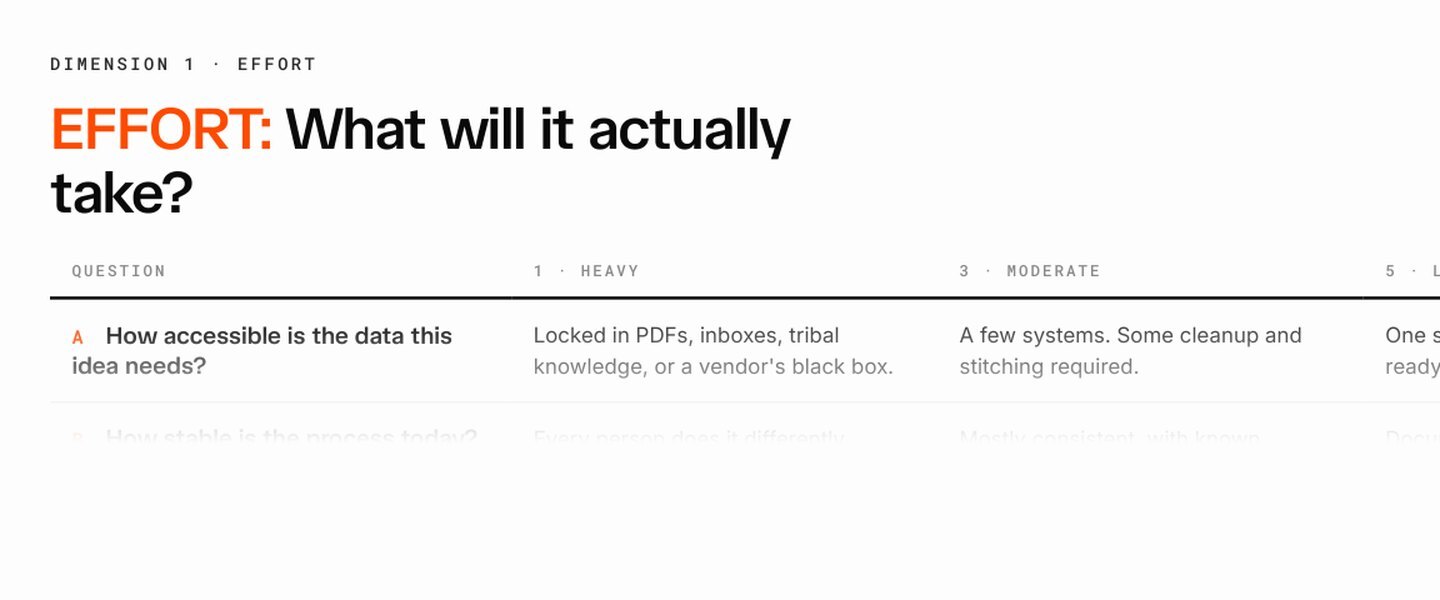
The 12 questions that score any AI idea — including the dimension most teams skip
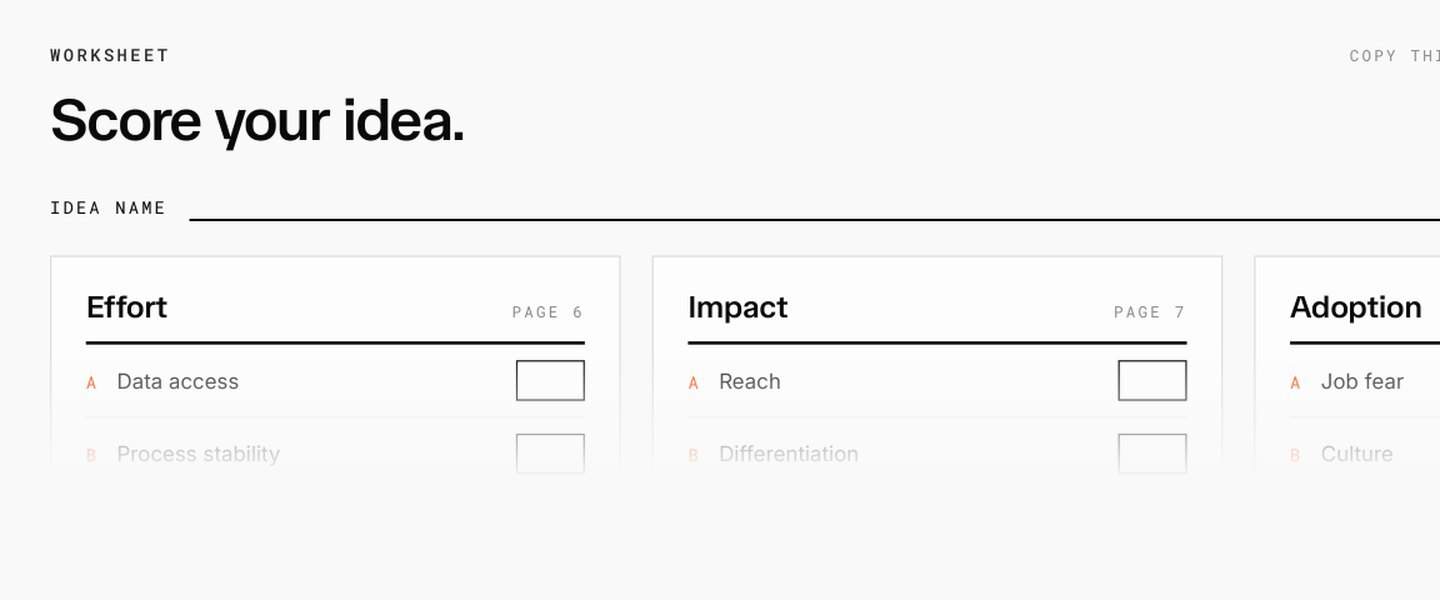
A one-page worksheet and the formula that ranks your list from 1 to 25
A worked example: two “sure things” that got opposite decisions
15 pages · 20 minutes per idea · Free
Trusted by teams at Ford Motor Company · Clark Hill · Inteva Products · US Farathane
Nearly every company uses AI. Almost none profit from it.
Use AI
88%
See real impact
6%
The gap is not the technology, and it is rarely the execution. Most organizations pick the wrong ideas — and evaluate them with a framework built for a different kind of project.
Source: McKinsey & Company, The State of AI, 2025.
“They ask the right questions. OnTrac AI consistently leads the conversation with questions we may not have considered and then identifies solutions.”
— Zach Raposo // US Farathane
Impact effort matrix
The impact effort matrix and AI: common questions.
What is an impact effort matrix?
An impact effort matrix is a 2×2 prioritization tool that plots ideas by the effort they take and the impact they return. Its four boxes — do first, big bets, maybe and avoid — help teams decide where to start. It works well for IT and process projects with predictable outcomes.
Does the impact effort matrix work for AI projects?
Not on its own. An impact effort matrix assumes that if you build something valuable, people will use it. AI projects rarely stall on effort or impact — they stall on adoption: a copilot nobody opens, an agent nobody trusts. The Realized Value Matrix™ adds adoption as a third dimension so that risk shows up before you build.
How do you prioritize AI use cases?
Score every candidate on the same criteria, with the skeptics in the room: the effort to implement, the impact if it works, and how likely your people are to adopt it. Combine those into one number and stack-rank the list. Consistent scoring beats a whiteboard debate every time.
What is an AI adoption framework?
An AI adoption framework is a structured way to judge — and improve — whether people will actually use an AI solution. It looks at how people feel about the change, how much their daily work shifts and who owns the result. Adoption is the dimension most teams skip, and the one you can most directly change.
How do you identify AI use cases worth building?
Start with the ideas your team is already debating, then score each one honestly on what it will take, what it returns and whether people will use it. Ideas that score well on all three are rare — and worth moving on before a competitor does.
Next step
Put your three ideas on the matrix.
Twenty minutes per idea. Start with the ones your team is already debating — the score will settle it.