Manufacturing has always been driven by efficiency. But the way companies pursue efficiency is...

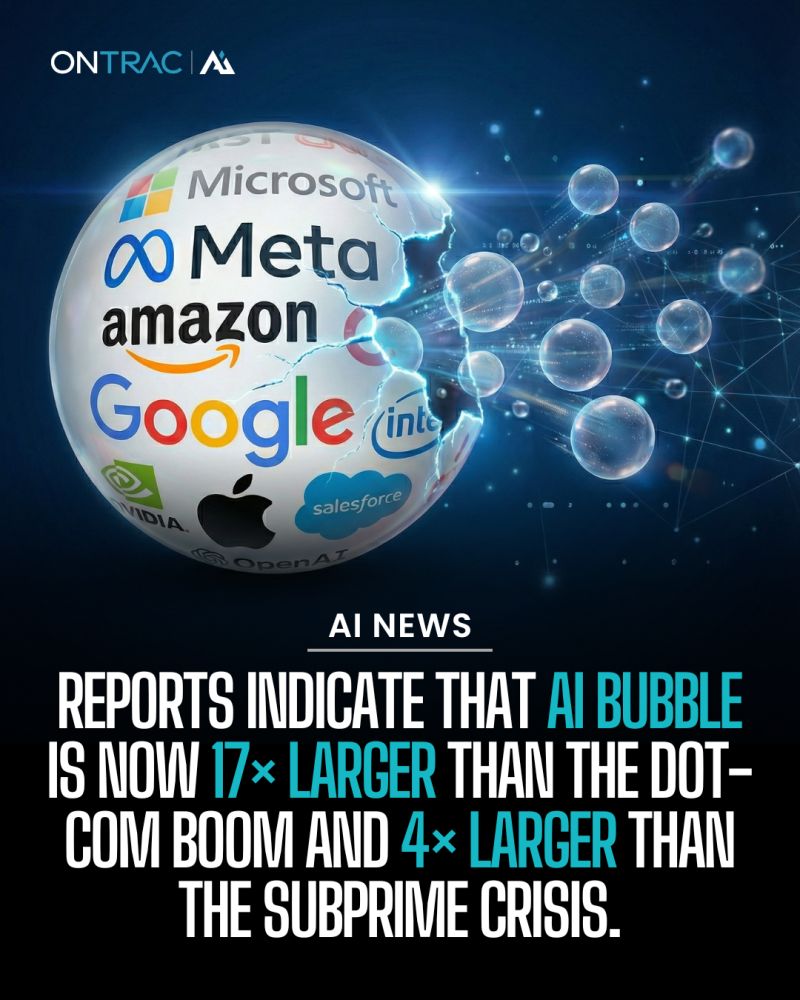
For the past year, a familiar narrative has resurfaced: the AI boom looks just like the dot-com bubble.
The comparison is understandable. New technologies often arrive wrapped in hype, inflated valuations, and bold promises. But equating today’s AI surge with the dot-com collapse of the early 2000s misses a critical point.
The foundation of this boom is fundamentally different.
To understand why, we need to look beyond surface-level similarities and examine who is building AI, how it’s funded, and how quickly it’s being adopted.
Why the Dot-Com Bubble Collapsed
The dot-com era was defined by optimism untethered from economic reality.
Between 1996 and 2001, more than 2,200 internet companies went public. Most had little to no revenue, unclear business models, and a vague hope that traffic alone would someday turn into profits. The assumption was simple: the internet would figure itself out later.
It didn’t.
When the bubble burst in 2000, nearly $5 trillion in market value vanished, triggering a broader economic recession. The collapse wasn’t caused by technology failure, it was caused by speculation outpacing fundamentals.
The AI Boom Is Built on Profitable Giants
Here’s the most important difference critics overlook:
The AI boom is not being financed by fragile startups burning venture capital.
It’s being built by companies like Microsoft, Google, Meta, and Amazon—organizations already generating massive, recurring revenue.
These companies aren’t gambling their core businesses on AI. They’re funding AI development from positions of strength.
Amazon isn’t selling less toothpaste to build data centers.
Google isn’t sacrificing ad revenue to train foundational models.
Microsoft isn’t abandoning enterprise software to chase hype.
AI is an extension of already-profitable ecosystems, not a speculative replacement. That alone changes how this cycle plays out.
Proven Business Models Change the Risk Profile
During the dot-com era, public markets rewarded companies for potential rather than performance. Today’s AI leaders already have what most dot-com companies never did:
- Established customer bases
- Clear monetization paths
- The capital to sustain long development cycles
This doesn’t eliminate risk—but it significantly reduces the likelihood of a systemic collapse driven by insolvency.
In short, AI isn’t waiting to discover how it will make money. It’s already embedded inside businesses that do.
Adoption Speed Is on a Completely Different Scale
Another major distinction is adoption velocity.
In 1996, Netscape—then the poster child of the internet—reached roughly 50 million users total.
Today, the top AI platforms collectively process over 5 billion prompts every single day.
AI is being adopted 15 to 60 times faster than early internet technologies largely because the infrastructure already exists and the value is immediately obvious to businesses. While many organizations are still figuring out how to deploy AI effectively, they no longer need convincing that it matters.
This Is Not a “Wait and See” Technology
The internet in the 90s required behavioral change. AI requires optimization.
AI now sits on top of systems people already use every day. That’s why adoption isn’t optional—it’s competitive. More importantly, AI is increasingly tied to operational efficiency, not novelty.
Organizations are using it to reduce costs, accelerate decisions, and scale expertise—without growing headcount at the same rate. That’s a very different value proposition from simply “being online.”
There Is One Warning Sign Worth Watching
That said, this doesn’t mean the AI boom is immune to excess.
One of the more troubling patterns from the dot-com era was circular revenue—companies inflating growth through interdependent deals that looked impressive on paper but lacked real demand.
We’re beginning to see similar dynamics emerge in parts of the AI ecosystem. Overlapping partnerships and bundled incentives can create the illusion of traction without durable customer value.
This doesn’t mean AI is a bubble—but it does mean not every AI investment is wise.
Survival vs. Success Are Two Different Things
AI will almost certainly survive this cycle.
It’s backed by profitable giants, embedded in critical workflows, and already delivering measurable productivity gains. But survival doesn’t guarantee success for every company labeled “AI-powered.”
The companies that will win are the ones using AI to solve real, expensive problems with clear ROI—not those simply slapping “AI-powered” onto a pitch deck.
From AI Hype to AI Impact
If you’re evaluating AI initiatives, the question isn’t “Is AI the future?”
It’s “What problem does this solve, and what does it replace?”
That mindset is critical for moving from experimentation to real business impact.
Explore practical AI solutions across operations here
The Bottom Line
The AI boom isn’t a replay of the dot-com bubble.
It’s happening faster, on stronger foundations, and with clearer economic incentives. But like every major technology shift, it will reward discipline—not hype.
The companies that succeed with AI don’t chase the biggest ideas first—they sequence for momentum. That principle sits at the core of The AI Trifecta: Impact, Effort, Adoption.
AI isn’t a shortcut to growth.
It’s a force multiplier for organizations that understand their costs, constraints, and value drivers.
The real question isn’t whether AI will last—it’s whether your AI strategy creates real value, or just looks good on a slide deck.